The argument in brief
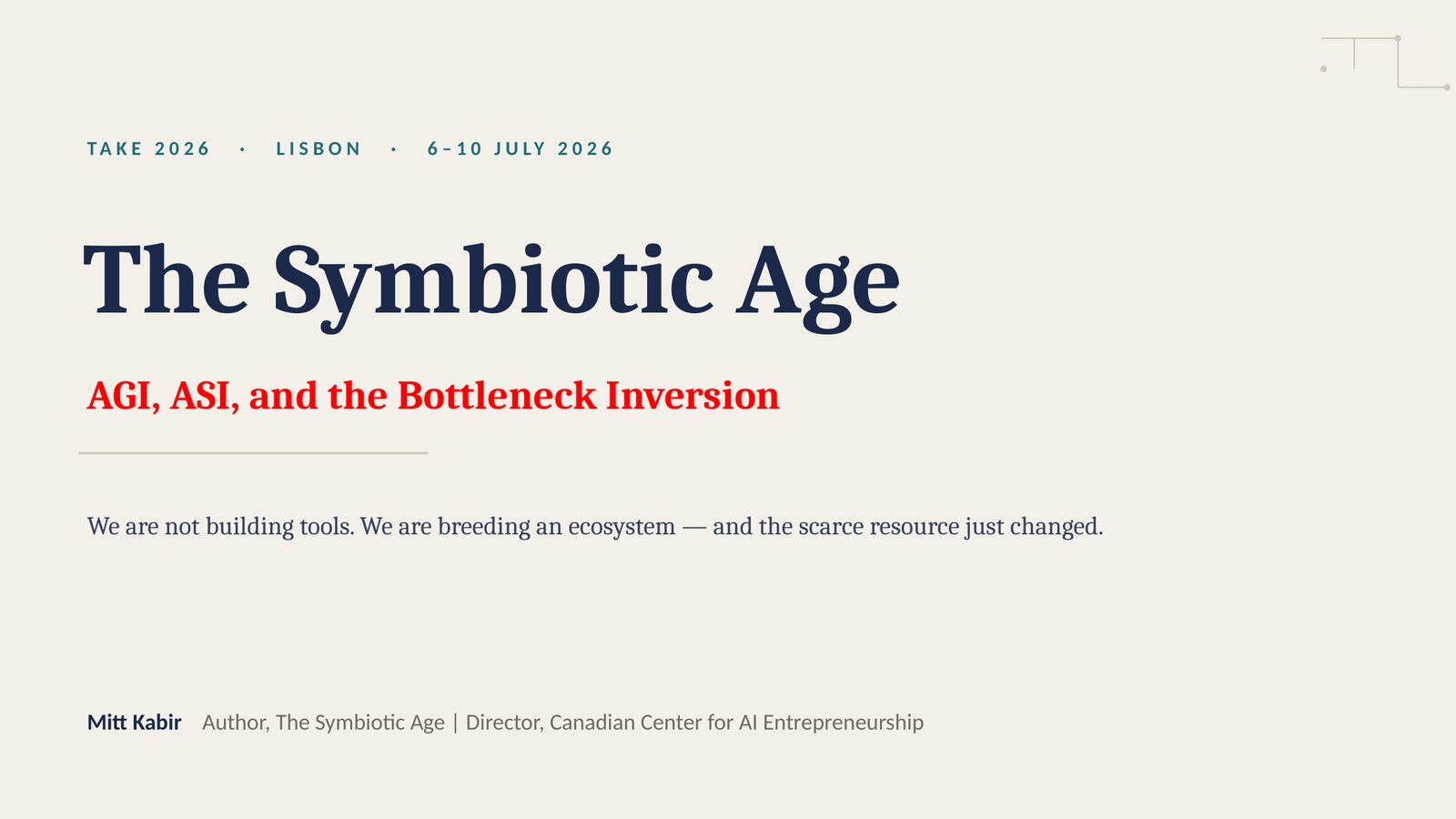
The public debate asks when artificial general intelligence will arrive. That is the wrong question. Expert forecasts range from next year to never, and the spread itself shows the term has no agreed meaning. The useful question is what networks of capable AI agents already do, and what that does to the economics of work.
The keynote makes three claims. First, superintelligence is more likely to arrive as a coordinated swarm of agents than as a single mind, which makes it something organizations govern rather than something they wait for (slide 26). Second, as the cost of producing intelligent output collapses, the cost of verifying it does not, and value migrates to whoever can prove, insure and stand behind an outcome: the Bottleneck Inversion and the Measurability Gap. Third, the risk to people is less replacement than atrophy: hand over the judgment along with the routine work and you lose the capacity that makes working with AI safe (The Leap and The Grid).
Where the argument continues
The governance framework behind the talk is published as the Octopus Protocol. The weekly AI Baseline newsletter on LinkedIn tests individual claims from it against evidence, one per issue.
The slides are published as delivered in July 2026, with three source citations corrected in October 2026. Figures and events are as cited on each slide at the time; later developments are not reflected. Slide 8 is an illustrative scenario. Speaker notes are not included.